
If you've driven through a Central Texas summer, you know the drill: you get back to a parked car after an hour and it feels like a sauna. The steering wheel is untouchable. The seat burns through your clothes. You've got the AC cranked on full blast for the next ten minutes just to make the cabin livable.
Window tint helps — but not all window tint helps equally. The difference between a $40 DIY film and a professional nano-ceramic install isn't just aesthetic. It's measured in degrees, in how fast your AC catches up, and in how long the film actually survives Texas UV before it starts to purple and peel.
This guide breaks down what to actually look for, which film types perform best in Texas heat, and what to ignore.
The Numbers That Actually Matter: IR Rejection and TSER
Most people focus on VLT (visible light transmission) — the darkness percentage. That matters for privacy and looks, but it's not the primary driver of heat control. The two numbers that actually determine how hot your car gets are IR rejection and TSER.
IR rejection (infrared rejection) measures how much infrared radiation the film blocks — the invisible spectrum you feel as heat. A film with 80% IR rejection blocks 80% of that heat-producing energy. It's the most direct measure of a film's heat-blocking technology, independent of how dark it is.
TSER (Total Solar Energy Rejected) is the broader metric — it measures the percentage of total solar energy blocked, including visible light, infrared, and UV combined. It gives you a more complete picture of overall performance. A film with 80% TSER is rejecting 80% of everything the sun throws at it.
One caveat with TSER: going darker automatically raises it, since blocking more visible light counts toward the total. That means a cheap dark dyed film can show a high TSER on paper without actually having good IR-blocking technology. When comparing films, look at both numbers — IR rejection tells you what the film's technology is doing, TSER tells you the total real-world impact.
Window Tint Film Types — Ranked for Texas Heat
| Film Type | IR Rejection | TSER | UV Block | TX Lifespan | Verdict |
|---|---|---|---|---|---|
| Budget Dyed | ~35–45% | ~40–55% | Partial | 1–3 years | Not for TX summers |
| Metallic / Reflective | ~50–60% | ~55–65% | Good | 5–8 years | Blocks signals — avoid |
| Nano-Carbon (Plus) | ~62% | ~70–75% | 99% | 10+ years | Strong for TX heat |
| Nano-Ceramic (Super) | ~80% | ~80–90% | 99% | Lifetime | Best for TX heat |
Why Nano-Ceramic Is the Best Choice for Texas
Nano-ceramic film uses microscopic ceramic particles suspended in the film to block infrared radiation without relying on metal. That means no signal interference with GPS, phone, satellite radio, or backup cameras — a major issue with older metallic films.
More importantly, the ceramic particle structure is inherently stable. It doesn't absorb heat like dyed film does — it reflects and blocks it. That means the film itself stays cooler, which extends its lifespan significantly in Texas UV conditions.
The practical result: a nano-ceramic install that's significantly cooler inside your vehicle, holds up for years without purple shift or bubble formation, and still looks sharp from the outside. In a climate as harsh as Central Texas, it's the only film we'd recommend putting a lifetime warranty behind.
Does Darker Tint Mean More Heat Rejection?
It depends on the film type — and the answer is different for each.
Dyed film: No. Dyed film works by absorbing light into the dye layer — but absorbed heat doesn't disappear, it re-radiates back into the cabin. Going darker with dyed film primarily adds privacy, not meaningful heat rejection. It's why dyed film shows poor IR rejection numbers regardless of shade.
Carbon film: Yes, to a meaningful degree. Carbon particles actively block infrared radiation, and a darker carbon film has higher carbon particle density — so more IR gets blocked. There's a real correlation between shade and heat rejection in carbon film. Going darker with a carbon film like Plus genuinely improves heat performance.
Ceramic film: No — and this is what makes it uniquely powerful. Nano-ceramic particles block IR independent of how much visible light passes through. A 50% VLT ceramic film can reject as much or more IR as a 20% VLT carbon film. Shade and heat rejection are completely decoupled. That means you can run a lighter 35% front window and still get maximum heat rejection — something no other film type can offer.
Front vs. Rear — Picking Your Shade
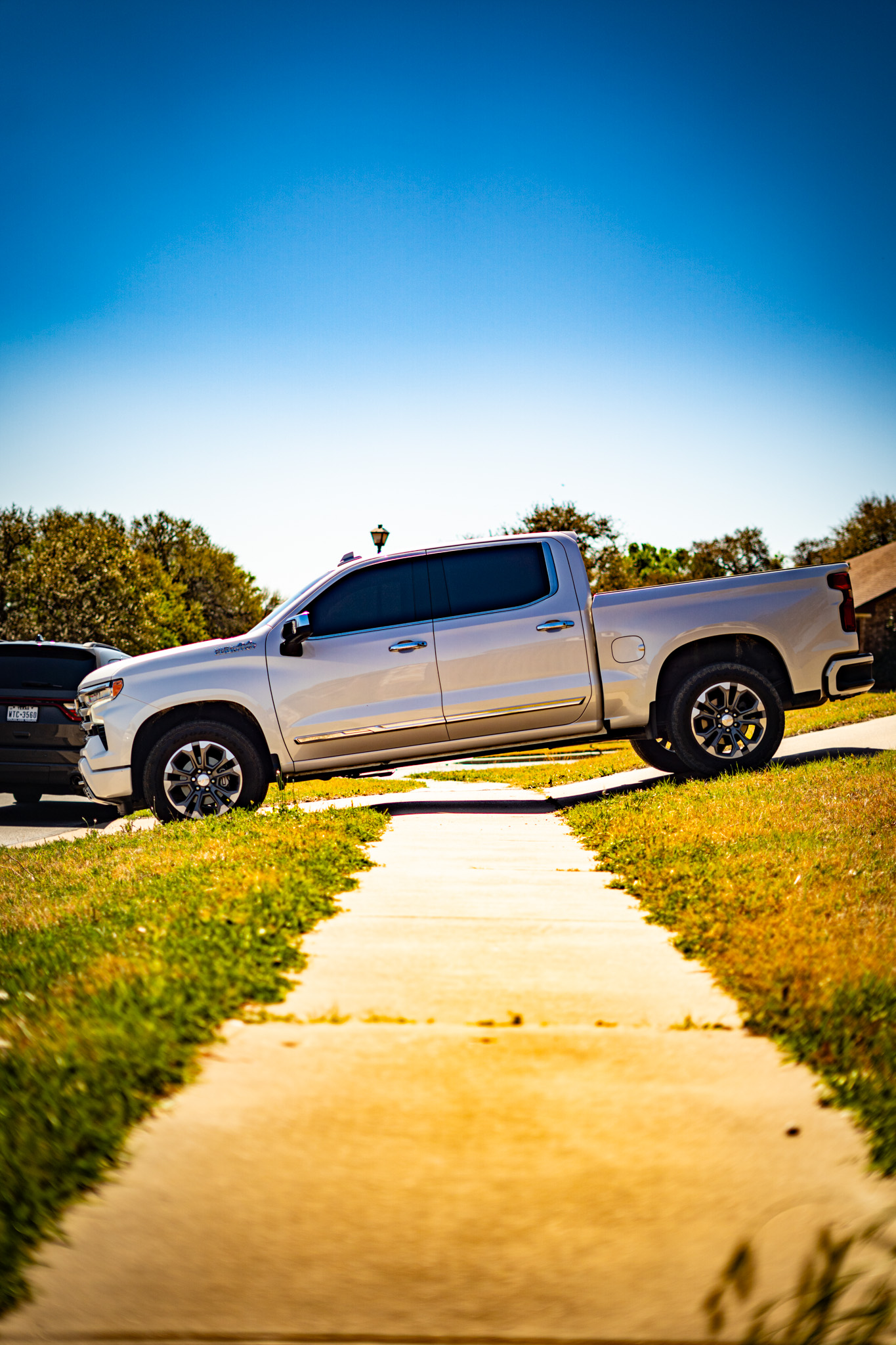
Most drivers don't pick one shade for the whole car. Rear windows are where people go darkest, for privacy and a cooler back seat.
On the front windows, 35% VLT is a popular sweet spot: noticeably darker, easy to see out of at night, and with a good film still providing strong IR rejection. See our window tint shade guide for how every common VLT looks.
What We Recommend for Texas Summers
Plus — Best Value
Serious Heat Control
Nano-carbon film. 62% IR rejection, 99% UV, lifetime warranty. A meaningful upgrade in heat rejection over dyed film. Holds up well in Texas heat. Most popular package at Chroma.
Super
Maximum Performance
Nano-ceramic film. 80% IR rejection, 99% UV, lifetime warranty. The best option for Texas heat — period. If you're going to tint a car you plan to keep, this is what makes sense.
The Bottom Line
For Texas heat, the answer is nano-ceramic window film with the highest IR rejection rating you can get. Shade matters less than people think — the film's technology is doing the heat work, not the darkness.
If budget is a real constraint, nano-carbon (Plus) is a strong middle ground: significantly better heat rejection than dyed film, no signal interference, and a lifetime warranty. For anyone who owns their vehicle long-term, ceramic is worth the additional cost — especially in a climate as punishing as Central Texas.
At Chroma Auto Lab, we install nano-carbon and nano-ceramic film from our Killeen location and serve the surrounding area including Harker Heights, Fort Hood, Copperas Cove, Temple, and beyond. If you're not sure which film is right for your vehicle, we're happy to make a recommendation.