
Window Tint Shade Guide: What VLT Percentage Should You Choose?
Most people know they want "dark" — but not what that means in practice. This guide breaks down every common tint percentage: what each one looks like, how it affects privacy and night visibility, and which shade fits different goals.
Updated April 2026 · By Chroma Auto Lab, Killeen TX
What VLT Actually Means
VLT stands for Visible Light Transmission — the percentage of visible light that passes through the film. The math is simple: a higher number means lighter, a lower number means darker.
A 5% VLT film lets only 5% of visible light through. A 50% VLT film lets half through. When people say "20% tint" or "35% tint," they're referring to the VLT number.
One thing worth knowing: the VLT number on the film is measured for the film alone. When the film is installed over factory glass — which already has its own light-blocking properties — the final installed appearance will be slightly darker than the film's rated VLT. Most factory glass sits around 70–75% VLT, so the combined effect is what you'll actually see. This is worth keeping in mind when looking at samples.
Front Windows vs. Rear Windows
Most people don't pick one shade for the whole car. The front side windows are the ones you look through most — checking mirrors, merging, reading the road at night — so most drivers keep them lighter, usually 25–35%.
The rear windows are about privacy and keeping the back seat cool, so that's where people go darker. 20% is the most popular rear shade, and 5% is the full limo look.
The Common Shades — What Each One Looks Like
Near-opaque from outside. In bright daylight, you can barely make out shapes inside the vehicle. From inside, you can see out clearly during the day — but at night, outward visibility is genuinely reduced. This is the "blacked-out" look. A strong privacy statement, most often used on the rear windows.
Very dark. Difficult to see into from outside during daylight. Outward visibility from inside is comfortable during the day. Night visibility is slightly reduced — most drivers adapt quickly. Common on trucks and SUVs where full privacy on rear passengers is the goal.
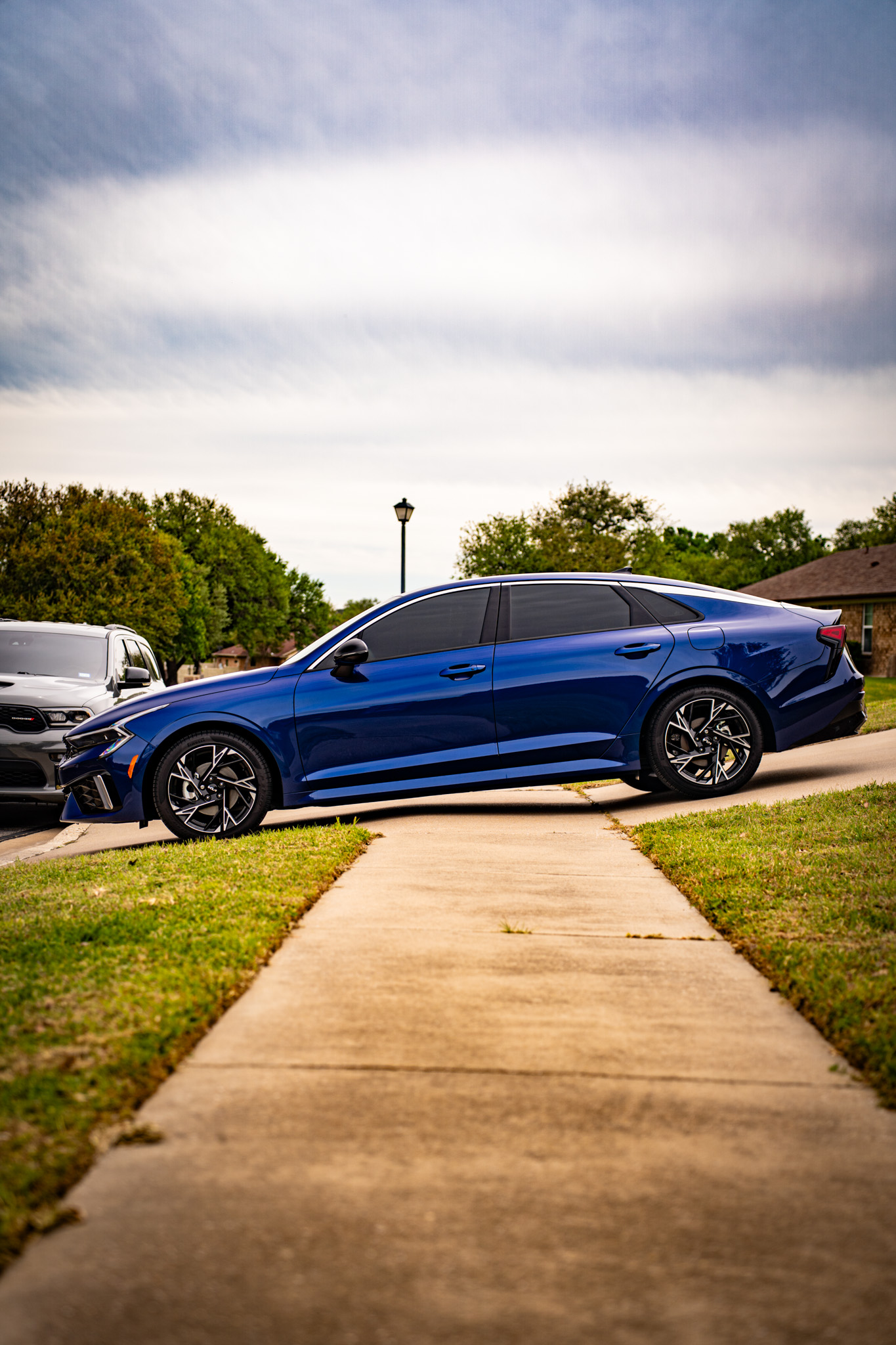
Dark, but not quite limo. Hard to see into from outside in daylight. Clean look that works on almost any vehicle color. Night visibility is minimally impacted for most drivers. This is the most popular shade for rear windows in Killeen — a strong privacy look without going full blackout.
Dark but clearly not opaque. From outside, you can tell the windows are tinted and it's difficult to see in detail, but you can make out the driver. From inside, visibility is excellent. This is the shade most people request for their front side windows.
Moderate darkness. The tint is clearly visible from outside — windows look noticeably darker than factory — but it's not a privacy tint. Offers solid UV and some heat protection, a clean aesthetic upgrade, and comfortable daytime and nighttime visibility. A good choice for front windows on drivers who want a tinted look without going very dark.
Light tint. From outside, the windows look subtly darker than stock — you'd notice it if you're looking for it, but it doesn't read as "tinted" at a glance. Virtually no privacy impact. Primarily chosen for UV protection and heat reduction without changing the vehicle's appearance. Popular for windshield-only installs and on vehicles where the owner wants protection without any visible change.
Shade Comparison at a Glance
| VLT % | Appearance | Privacy Level | Night Visibility |
|---|---|---|---|
| 5% | Near-opaque / limo | Maximum | Noticeably reduced |
| 15% | Very dark | Very high | Slightly reduced |
| 20% | Dark | High | Minimal impact |
| 25% | Dark — most requested front | Moderate–high | No impact |
| 35% | Moderately dark | Moderate | No impact |
| 50% | Light / subtle | Low | No impact |
How to Actually Make the Decision
Most shade decisions come down to one or two of these factors:
Go 20% or darker on the rear windows, and keep the fronts a little lighter for driving visibility. 25% is the most common front choice. If privacy is all that matters and you're rarely driving after dark, 5% rear with 25% front is a common setup.
Most vehicles look best with consistent shading front-to-back. A common aesthetic setup: 25–35% on fronts, 20% on rears. The slight mismatch in shade is visually minimal.
Shade alone doesn't tell you much about heat blocking. Film type is the bigger variable. A 35% ceramic film blocks significantly more heat than a 20% dyed film. Don't go darker just to stay cooler — upgrade the film instead.
If you do a lot of rural night driving or have concerns about low-light visibility, 35% or 25% on the fronts is the more comfortable choice. 5% limo on rear windows genuinely reduces outward visibility after dark — understand that trade-off before committing.
Shade Is Not the Same as Film Quality
This is the most important thing most customers don't know going in: the darkness of the tint and the performance of the film are two separate things.
A 20% dyed film and a 20% ceramic film look identical from the outside. Both are dark. But the ceramic film will reject far more infrared heat — the part of solar radiation that actually heats up your cabin — because it uses nano-ceramic particles that block IR without affecting visible light.
What this means practically: if you pick a 35% ceramic film (Super) over a 25% dyed film, you'll have lighter-looking windows that actually keep the car cooler. Going darker doesn't get you more heat rejection. Choosing better film does.
The shade you pick determines what the car looks like and how much privacy you have. The film package you pick determines how it performs. Those are separate decisions — and both matter.
All packages are available in 5%, 15%, 20%, 25%, 35%, and 50% VLT. Shade choice doesn't affect package pricing.
What We See Most Often in Killeen
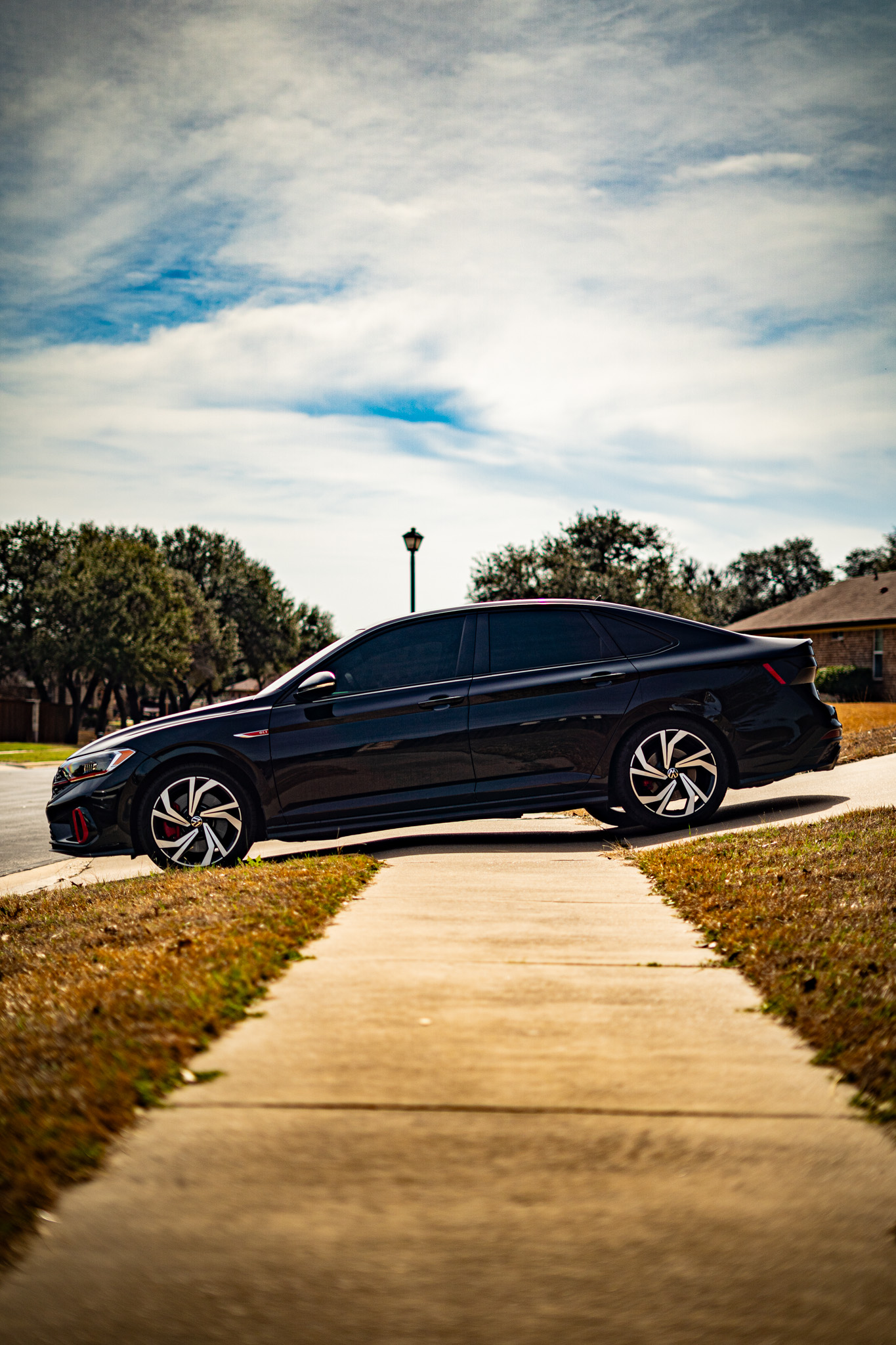
The most requested setup at Chroma in Killeen is 25% front, 20% rear. It gives you a dark front window that's still easy to see out of, solid rear privacy, a cohesive look across the vehicle, and no night-visibility concerns.
For customers whose main goal is privacy — contractors, families with kids, anyone who parks in public a lot — we lean toward 20% all-around on rears, sometimes 15% on the rear passenger doors. For daily drivers who want a clean aesthetic upgrade without maximum privacy, 35% front and 35% rear is clean and consistent.
For the film package question: in Central Texas summers, we recommend Plus or Super to anyone who parks outside regularly. The difference in cabin temperature between dyed and ceramic film on a 100-degree Killeen afternoon is real and noticeable. Shade choice handles the look — film choice handles the heat.
Frequently Asked Questions
What window tint percentage should I get?
What's the difference between 20% and 35% tint?
Does darker tint mean more heat rejection?
Can you see through 20% tint at night?
Does the shade affect the price?
Not Sure What Shade to Choose?
We'll show you physical samples on your actual vehicle before anything goes on. Every appointment starts with a consult — no charge, no pressure.
Chroma Auto Lab · Killeen, TX · Mon–Sat 9AM–6PM